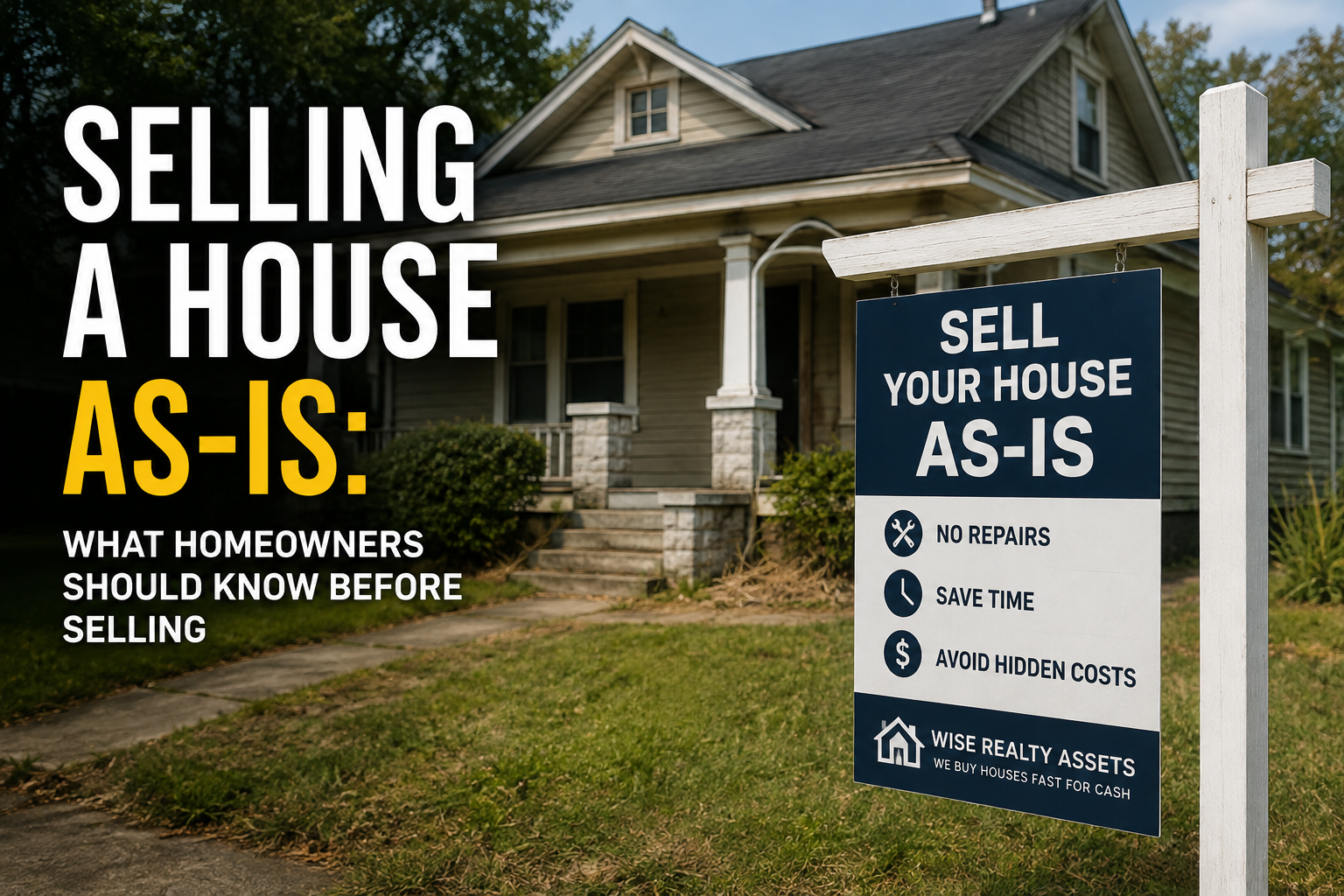
What Does It Mean to Sell House As-Is?
When you sell house as is, you're offering the property in its current condition, without making repairs or improvements before the sale. The buyer accepts the home with all its existing defects, maintenance issues, and cosmetic wear—known, unknown, and disclosed.
This doesn't mean you hide problems or avoid disclosure requirements. It simply means the seller is not going to paint, replace the roof, repair the foundation, or update the kitchen before handing over the keys. The buyer is purchasing the property and accepting responsibility for whatever work it needs.
Selling a house as-is is an attractive option for homeowners who want to avoid the time, expense, and stress of pre-sale renovations. It's also practical for those with limited resources, tight timelines, or properties that would require substantial repairs to attract traditional buyers.
Thinking About Your Options?
Understand what your property is actually worth and whether an as-is sale makes financial sense for your situation. Get a free assessment with no pressure or obligation.
Explore Your OptionsWhat As-Is Sales Do NOT Mean
Before diving deeper, let's clarify what selling a house as-is doesn't mean. Many homeowners have misconceptions about as-is sales that lead to legal problems or failed transactions.
You Still Have Disclosure Obligations
Selling a property as-is does not eliminate your responsibility to disclose known defects and material issues. Real estate disclosure laws vary by state, but in most jurisdictions, sellers must inform buyers of major problems—foundation cracks, roof leaks, water damage, electrical issues, pest infestations, and similar concerns. An "as-is" label doesn't give you permission to hide what you know about your property's condition.
Homeowners who attempt to conceal serious defects can face legal liability, even in as-is sales. If a buyer discovers undisclosed damage after closing, they may have grounds for litigation. Consult a qualified local real estate attorney or agent regarding your specific disclosure obligations.
Buyers Can Still Conduct Inspections
An as-is sale doesn't prevent buyers from hiring home inspectors. Most buyers—even those specifically seeking as-is properties—will still want a professional inspection to understand the scope of repairs needed. The difference is that after the inspection, they accept the condition rather than demanding repairs or credits. The negotiation changes, but the inspection itself isn't waived.
Buyers Aren't Automatically Accepting Every Defect
Selling house as is doesn't mean a buyer will accept an uninspectable property or one with code violations. A severely damaged structure, a home with condemned utilities, or a property with violations may not qualify for traditional financing—and cash buyers may walk away if repairs exceed their profit margin.
How Selling a House As-Is Actually Works
The practical process of selling an as-is property differs somewhat from traditional sales, though the fundamental steps remain similar.
Marketing and Buyer Pool
Properties marketed as as-is attract specific types of buyers: individual cash investors, house-flipping companies, rental property investors, wholesalers, and homebuyers willing to take on repairs themselves. They do not typically attract owner-occupant buyers seeking a move-in ready home.
This narrower buyer pool means you may have fewer offers, but the buyers who do make offers understand what they're buying and accept the condition.
The Inspection and Appraisal Process
In a traditional sale, if an inspection reveals issues, the buyer can request repairs or credits—leading to renegotiation. In an as-is sale, the buyer conducts the inspection but cannot demand repairs. They either accept the condition and move forward or walk away.
Appraisals for as-is properties typically reflect the cost of necessary repairs. If your home needs $40,000 in work, the appraised value will be lower than a similar home in good condition. Cash buyers factor repair costs into their offer from the start.
Financing Challenges with As-Is Properties
Many traditional lenders will not finance a home with significant defects. A buyer seeking conventional financing on a house in poor condition may struggle to get approved because the property doesn't meet lending standards. This is why as-is sales often involve cash buyers or hard money lenders—options that come with higher interest rates and stricter terms.
If you're selling a house as is, prepare for the possibility that traditional financing buyers may be unable to close, even if they want to purchase your property.
Need Help Evaluating Your Situation?
Whether you own a property needing minor cosmetic work or major repairs, we can provide an honest assessment of its current condition and value. No pressure, no obligation—just straightforward guidance.
Get Your Free AssessmentAdvantages of Selling a House As-Is
Avoid Upfront Repair Costs
The main advantage of selling house as is is eliminating repair expenses. Major work—roof, HVAC, foundation, plumbing—can cost thousands. You avoid these outlays entirely by selling as-is.
Reduce Time to Closing
Contractor delays and renovations extend timelines. When you sell house as is, you skip the repair phase and move straight to closing. This is valuable for tight timelines, though as-is sales depend on your buyer pool and local market.
Certainty and Simplified Process
As-is transactions are straightforward. Buyers know the condition; there's no post-inspection renegotiation or requests for credits. Once you agree on price, the process is simpler and more predictable.
Access to Specialized Buyers
Properties that wouldn't sell on the traditional market—severely outdated homes, properties with deferred maintenance, or fixer-uppers—can attract cash buyers and investors who specialize in renovation and resale.
Disadvantages of Selling a House As-Is
Potentially Lower Offers
When you sell house as is, you typically accept a lower sale price. Buyers factor repair costs and profit margins into their offers. The tradeoff is financial: you avoid repair expenses but receive less at closing.
Smaller Buyer Pool
Fewer buyers pursue as-is purchases, potentially meaning fewer offers and less competition on price.
Difficulty with Traditional Financing
If a buyer needs a conventional mortgage, lenders may reject the property due to its condition. This limits your buyer pool further and can strand motivated buyers who lack cash.
You Still Bear Responsibility Until Closing
Until the sale closes, you remain responsible for the property—maintenance, insurance, property taxes, and liability. If the roof collapses or pipes freeze before closing, that's your problem, not the buyer's.
Who Chooses to Sell House As-Is?
Properties are commonly sold as-is in several situations: homes requiring major systems replacement (roof, HVAC, electrical, plumbing), inherited properties with deferred maintenance, rental properties being exited, and distressed situations where speed matters. Essentially, when repair costs are substantial or circumstances favor a quick transaction, selling house as is becomes the practical choice.
Is Selling a House As-Is Right for You?
Deciding whether to sell house as is depends on weighing repair costs against the lower sale price you'll receive. Consider these factors:
An As-Is Sale Makes Sense If:
- Repairs needed exceed your available capital
- Your timeline is tight and repairs would delay closing
- The property attracts investor buyers (multi-unit, rental history, land value)
- You want to avoid the disruption and uncertainty of renovations
- Your local market has few buyer interested in fixer-uppers
Reconsider an As-Is Sale If:
- Your home needs only cosmetic work (paint, flooring, landscaping)
- The local market strongly favors move-in ready homes
- Strategic repairs would significantly expand your buyer pool and offers
If your primary concern is selling quickly rather than property condition, read our guide to selling a house fast to explore timeline-focused strategies.
The Financial Reality: Price vs. Convenience Trade-Off
The core decision when choosing to sell house as is boils down to this: How much is avoiding repair costs and hassle worth compared to receiving a lower sale price?
Calculate your specific situation: estimate repair costs, research current offers on similar as-is properties in your area, and work backward from the price you need. If as-is offers meet your target, the convenience justifies the lower price. If not, strategic repairs might be worth your investment. This is a financial calculation unique to your property and circumstances.
Frequently Asked Questions: Selling a House As-Is
Key Takeaways: Selling a House As-Is
- Selling house as is means offering your property in current condition without making repairs first
- Disclosure obligations remain even in as-is sales; consult local professionals about your specific requirements
- As-is sales attract investors, cash buyers, and renovation-minded buyers, not typical owner-occupants
- Buyers factor repair costs into offers; research comparable properties to understand your market value
- Traditional lenders often decline as-is properties; prepare to work with cash buyers
- Weigh repair costs and timeline against the lower sale price to make your decision
Ready to Explore What Your Property Is Worth?
Whether you're considering an as-is sale or exploring other options, understanding your home's true market value helps you make informed decisions. Get a free assessment tailored to your situation—no sales pressure, just honest guidance.
Get Your Free Home Evaluation